Rare Books
Architectural
Image not available
You might also be interested in
Image not available
Garbutt, Frank A
Manuscripts
1 item: faint photocopy of handwritten letter from Marian Otis Chandler to Frank A. Garbutt, date not visible. He had written a "tribute" to Harry Chander, possibly at the time of Chandler's death in 1944, and Marian wanted to thank him. "Because of your long association you could speak with understanding," she wrote.
mssLAT
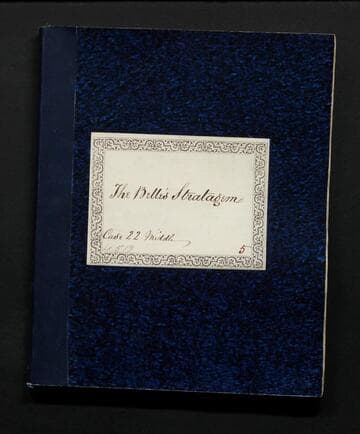
The Belle's Stratagem
Manuscripts
There are a number of discrepancies in the dialogue between manuscript and printed version.
mssLA 513
Image not available
Chronological File - November
Manuscripts
Approx. 35 items. Letters and memos. Subjects and correspondents include: several letters of regret when NBW did not accept invitations to speak or sit on panels due to, in his words, "my new role as consultant to Otis Chandler...makes my schedule so uncertain that I cannot undertake firm commitments"; (11/16) brief letter to Pierre Salinger (then living in France); in one letter (11/16) NBW reveals, "I'm usually at The Times Tuesday, Wednesday and Thursday, unless I'm on an out-of-town assignment for Otis Chandler"; (11/9) letter to Paul Ziffren on Picasso and his art; etc.
mssLAT
Image not available
The gates of hell opend : in a dialogue between the Observator. and Review dedicated to Aminadab
Rare Books
Imaginary dialogue in verse between two Whig newspapers, lamenting the ascendancy of high-church factions after the Sacheverell affair.
657355
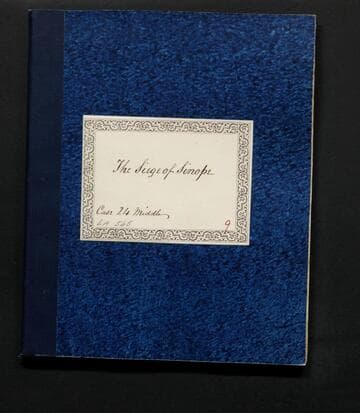
The Siege of Sinope
Manuscripts
Slight discrepancies between manuscript and printed text in the dialogue and in the order of scenes in Act V.
mssLA 545
Image not available
Music, acoustics & architecture
Rare Books
Acoustics is one of the youngest classical sciences, with the theoretical foundations being formulated by Lord Rayleigh in 1877. In the period between 1898 and 1905, Wallace Clement Sabine advanced the application of acoustics to architecture. But it was the development of the vacuum-tube amplifier, loudspeakers, and noise-free microphones in the second quarter of the 20th century that allowed the amassing of enough accurate data to make acoustics an effective engineering science. Before electronic equipment was invented, acousticians lacked both the means to produce specific types of sounds and to then measure the strength of them. Before these tools existed, designers of music halls could learn about acoustics only by observing other halls, speculating about which factors were responsible for glorious sonorities in one place and muddled cacophony in another. The information herein applies to any concert hall or opera house, the result of hundreds of interviews with opera and symphony orchestra conductors, performers, and music critics; of listening to music in some sixty different halls; of collecting precise acoustical measurements, accurate architectural drawings, and photographs of said halls. The story of the acoustics of many of the world's greatest halls is told as simply as possible, while maintaining technical accuracy.
721098